

Many older buildings in Lebanon have switch boxes with only a line and a load wire, and no neutral. A no neutral smart switch solves this by drawing a tiny current through the light itself, so you can upgrade to smart control without rewiring.
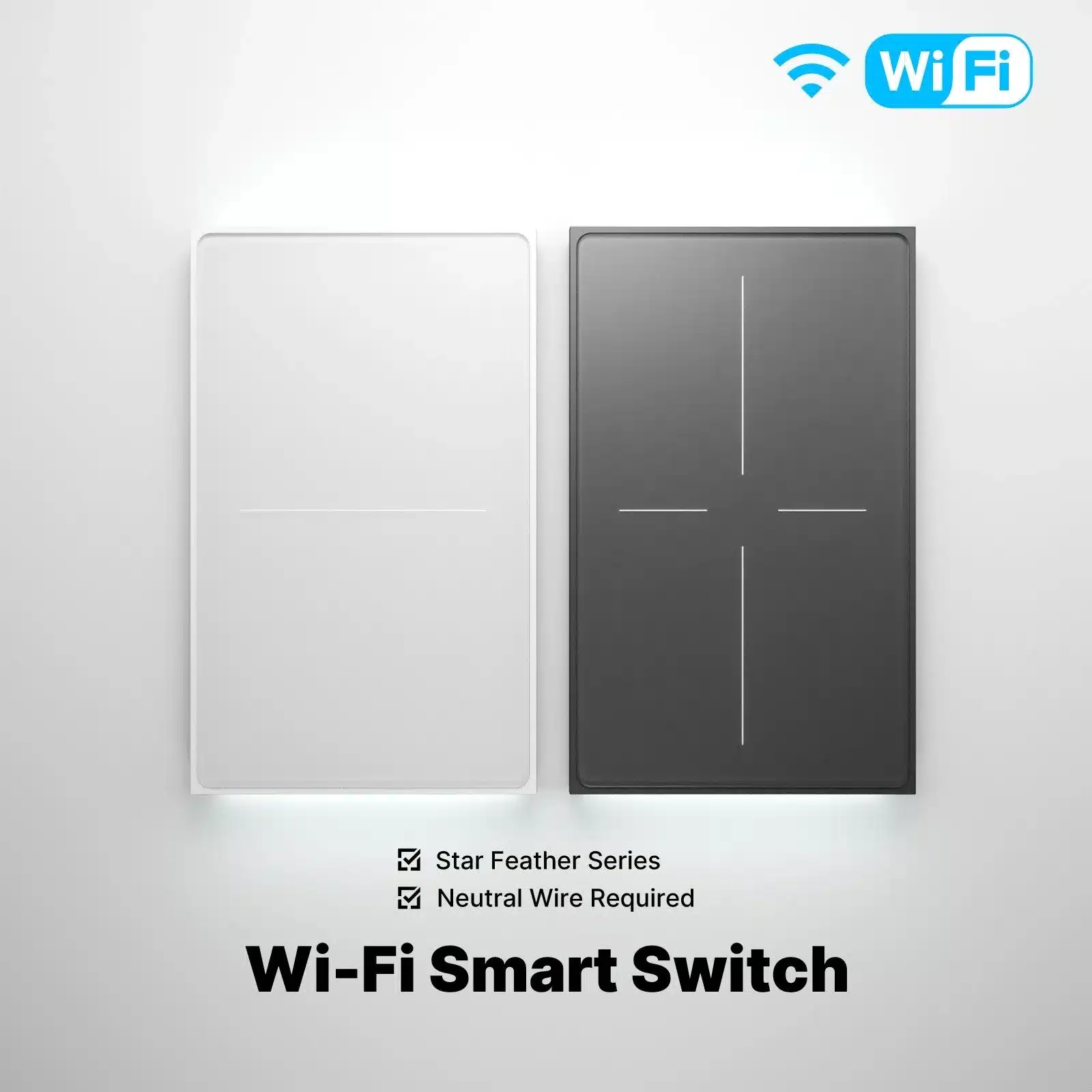
Neutral vs No-Neutral: What Is the Difference?
A standard smart switch needs a neutral wire to power its electronics continuously. In many older homes, the neutral only goes to the light fitting, not to the switch box. A no-neutral switch is designed to work with just line and load, so it fits these installations.
When to Choose a No Neutral Smart Switch
- Your switch box has only two wires.
- You do not want to open walls to add a neutral.
- You are renovating one room at a time.
- The lights are standard or dimmable LED with enough load.
6 Essential Tips for Installation
1. Confirm the Wiring
Ask an electrician to check whether a neutral exists. If it does, a neutral model gives the most stable result.
2. Check the Minimum Load
No-neutral switches need a minimum load to work. Very low wattage LED bulbs may flicker or glow when off.
3. Use the Capacitor When Needed
Many models include or recommend a small capacitor installed at the light fitting to stabilise low loads. Follow the manufacturer diagram.
4. Choose Quality LED Bulbs
Better quality LED drivers reduce flicker. Avoid mixing very different bulbs on the same circuit.
5. Prefer Zigbee for Larger Homes
Zigbee no-neutral switches work with a gateway and help build a mesh in the home.
6. Test Before Closing
Test on, off and dimming if available before fixing the switch to the wall.
Recommended Models
WeVolt stocks MOES and SONOFF switches in neutral and no-neutral versions, in several gang options and designs. Browse our smart wall switches or read our MOES smart switch with Alexa guide.
Fixing Common No-Neutral Problems
- Flicker when off: add the recommended capacitor or increase the load.
- Switch not pairing: check the load is connected and powered.
- Random restarts: check for loose connections and a stable supply.
- Dimming issues: confirm the bulbs are dimmable.
For background, see this light switch overview.
How No-Neutral Switches Power Themselves
A no-neutral switch lets a very small current flow through the lamp even when it is off, just enough to keep its electronics alive. With incandescent or high wattage loads this is invisible. With very efficient LED bulbs, that small current can make the bulb glow or flicker, which is why a capacitor or bypass device at the light fitting is often recommended.
When to Add a Neutral Instead
If you are renovating and walls are open, pulling a neutral to each switch box is the best long term solution. It lets you choose any smart switch, supports low LED loads without extra parts and gives the most stable operation. For finished walls, a no neutral smart switch avoids damage and extra work.
Choosing Gangs and Designs
Count the lights controlled from each box and choose one, two or three gang models to match. Keep the same series across the home for a consistent look.
No Neutral Smart Switch FAQ
Is a no-neutral switch less reliable?
It is reliable when the load is suitable. Neutral models are more stable with very low loads.
Can I use it with a fan?
Check the product page. Many no-neutral switches are designed for lighting only.
Do I need a hub?
WiFi models connect directly. Zigbee models need a gateway.
Can WeVolt check my wiring?
Send us a photo of your switch box and we will recommend a model.
Upgrade older homes easily with a no neutral smart switch from WeVolt.
Need help choosing? WeVolt is based in Beirut, delivers across Lebanon and answers product and wiring questions by phone and WhatsApp. Browse our full shop or contact our team for a free recommendation.