Clean busbar processing is the backbone of a professional distribution board. Accurate holes, clean bends and square cuts make assembly faster and connections more reliable. This guide explains the three core operations, the machines used and the tips that keep quality consistent.
The Three Core Operations
Punching
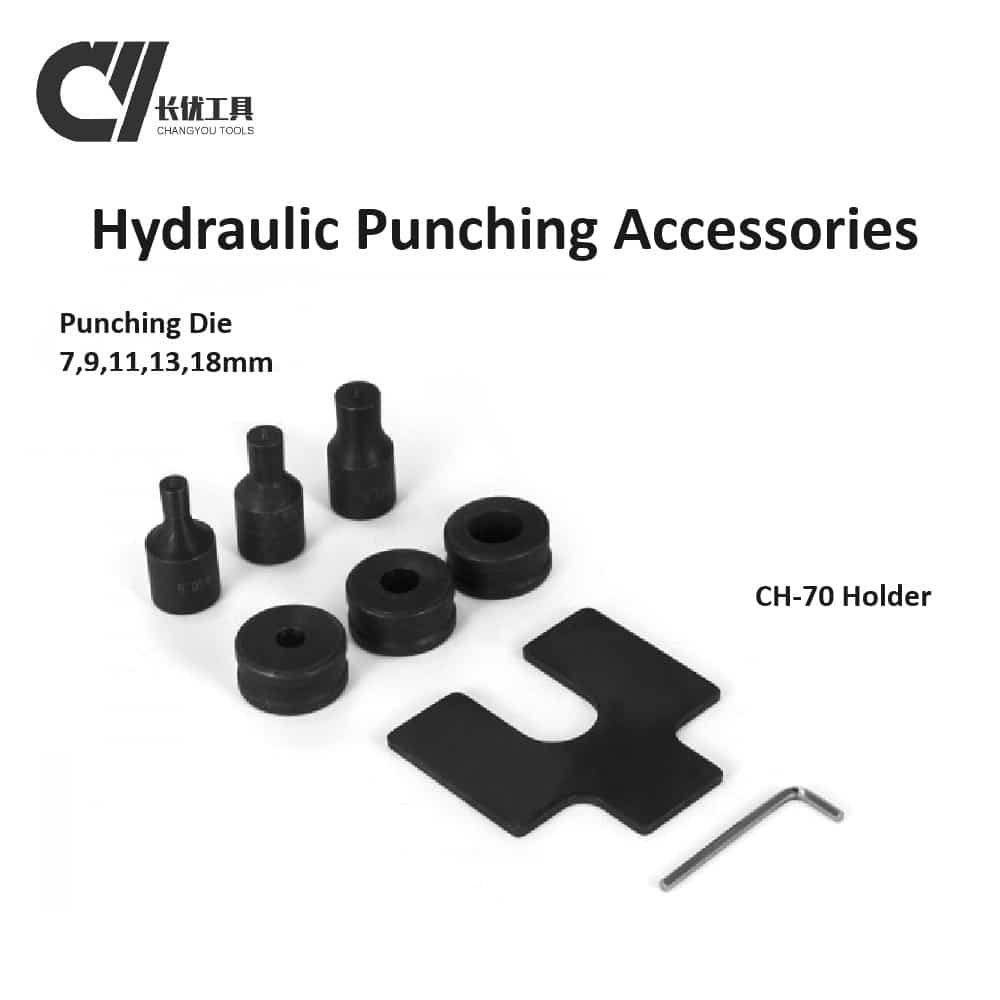
Holes for bolted connections are punched with a hydraulic punching machine such as the CH-70, using interchangeable dies for different hole sizes.
Bending
Flat and edge bends are made with a hydraulic bending tool such as the CB-150D, giving repeatable angles.
Cutting
Busbar is cut to length with a cutting machine such as the CWC-200 for square, burr free edges.
The HHB-700A electric hydraulic pump powers these machines. See our busbar processing machines.
8 Essential Tips for Busbar Processing
- Measure and mark all holes and bends before starting.
- Cut first, then punch, then bend, to keep dimensions accurate.
- Use the correct die size for each hole.
- Deburr edges after cutting and punching.
- Allow for bend deduction when calculating lengths.
- Keep dies and blades clean and sharp.
- Check hydraulic oil level and hose condition before each shift.
- Inspect the first piece of each batch before continuing.
Choosing Supports and Accessories
Mount processed busbar on insulating supports such as SM and CT supports from our busbar supports range, and keep spare valves, hoses and gauges on hand.
Safety in the Workshop
- Wear gloves and safety glasses.
- Keep hands clear of dies and blades.
- Never exceed the rated pressure.
- Disconnect the pump before changing tools.
Maintenance Checklist
- Check for oil leaks at hoses and fittings.
- Replace worn seals with matching spare parts.
- Store dies in their cases.
- Keep the pressure gauge readable.
Pair your busbar work with the right crimping tools and see the full electrician tools range. For background, see this busbar overview.
Planning a Busbar Layout
Before processing, draw the busbar layout with lengths, hole positions and bend points. Standardise hole sizes and spacing across projects so you can reuse the same dies and settings. A clear drawing reduces waste and makes it easy for any operator to reproduce the same parts.
Quality Checks Before Assembly
- Check hole alignment with the components they connect to.
- Confirm bend angles with a template.
- Remove burrs and sharp edges.
- Clean the contact surfaces before bolting.
- Torque bolts according to the component specifications.
Organising the Workshop
Place the pump centrally between the punching, bending and cutting machines, and keep hoses tidy to avoid damage. Store dies by size and label them clearly. A well organised station speeds up production and improves safety.
Copper vs Aluminium Busbar
Copper busbar offers high conductivity and is common in distribution boards. Aluminium is lighter and cheaper but needs larger sections for the same current and careful jointing. Check that dies, blades and bending tools are suitable for the material and thickness you process, and follow the machine manual for capacity limits.
Related Reading
Continue with crimping tools and hydraulic copper machines, busbar supports and Tongou smart breakers. Each guide covers practical steps for Lebanese homes and businesses, with product recommendations from the WeVolt range and tips from our support team.
Busbar Processing FAQ
Can one pump power several machines?
Yes, when the machines are compatible with the pump. Connect one machine at a time.
Do you sell spare dies and blades?
Yes, we stock spare parts for the machines we sell.
Which operation comes first?
Usually cut, then punch, then bend.
Is training needed?
Operators should follow the machine manual and safety instructions.
How long do hydraulic dies last?
It depends on material, thickness and volume. Inspect dies regularly and replace them when holes show burrs or deformation.
Improve your panel quality with busbar processing machines from WeVolt.
Need help choosing? WeVolt is based in Beirut, delivers across Lebanon and answers product and wiring questions by phone and WhatsApp. Browse our full shop or contact our team for a free recommendation.